

+36 1 317 8570
info@helpers.hu
Monday - Friday
9am - 5pm CET
Helpers Hungary Kft
Budapart Gate
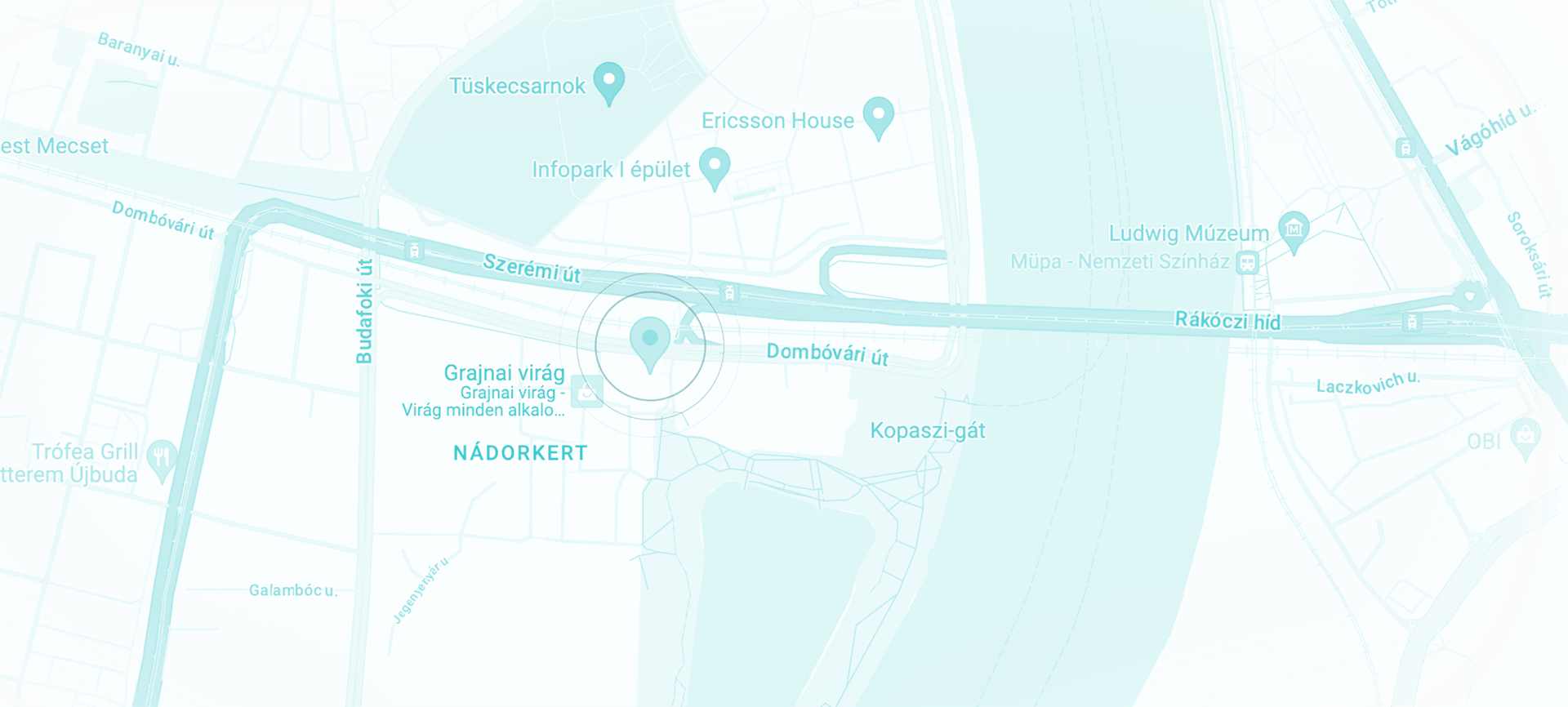
Dombóvári út 27
Budapest 1117, Hungary
If you’re visiting us, please use entrance A and come to the 2nd floor.
Monday - Friday
9am - 5pm CET
Helpers Hungary Kft
Budapart Gate
Dombóvári út 27
Budapest 1117, Hungary
If you’re visiting us, please use entrance A and come to the 2nd floor.

Considering real estate as part of your plans for long-term residence in Hungary? Property ownership alone does not automatically grant residency, but for eligible clients, real estate may form part of a wider relocation and residency strategy.
HELPERS combines more than 20 years of experience in real estate and immigration-related services to support international clients considering their options in Hungary. We can help you identify suitable residential properties, coordinate the property purchase and understand the relevant residency requirements.
Whether you are planning to relocate with your family or establish a longer-term base in Hungary, our team can support you through the relevant stages of the process and help you make informed decisions.
HELPERS offers a fast and straightforward route to Hungarian residency through real estate investment and business activity.
Just like in the well-known programs of Portugal, and previously Spain, the main element of the program is still real estate investment. Residency will not be based on this, however, but on the activity of the Hungarian company you will also need to set up for property management. As such, real estate residency with HELPERS is a form of business immigration: the property is acquired and managed through a local business rather than residency being granted simply because you own property in Hungary.
The service HELPERS offers combines real estate acquisition and management with business setup and handling the relevant residency processes.
If you are more interested in the Hungarian Golden Visa instead, which offers residency through direct investment into a qualifying real estate fund, please visit our Golden Visa page.
Investment: purchase of at least two apartments, ca. EUR 300,000 in total.
Company setup and one year maintenance, administration, legal and personal assistance by HELPERS: EUR 13,990 (+VAT) including:
Processing time: ca. 3 months
The first step is to establish a Hungarian company that will manage the real estate investment. HELPERS can assist with company formation, registration and opening a business bank account.
Your main business activity will be property management and rental, with the income generated from the properties you purchase. The company can also conduct other business activities in Hungary and the EU, if that is something that would be relevant to you.
The business will primarily generate income by renting out the real estate you purchase. The properties therefore need to support a viable rental business and attract reliable tenants.
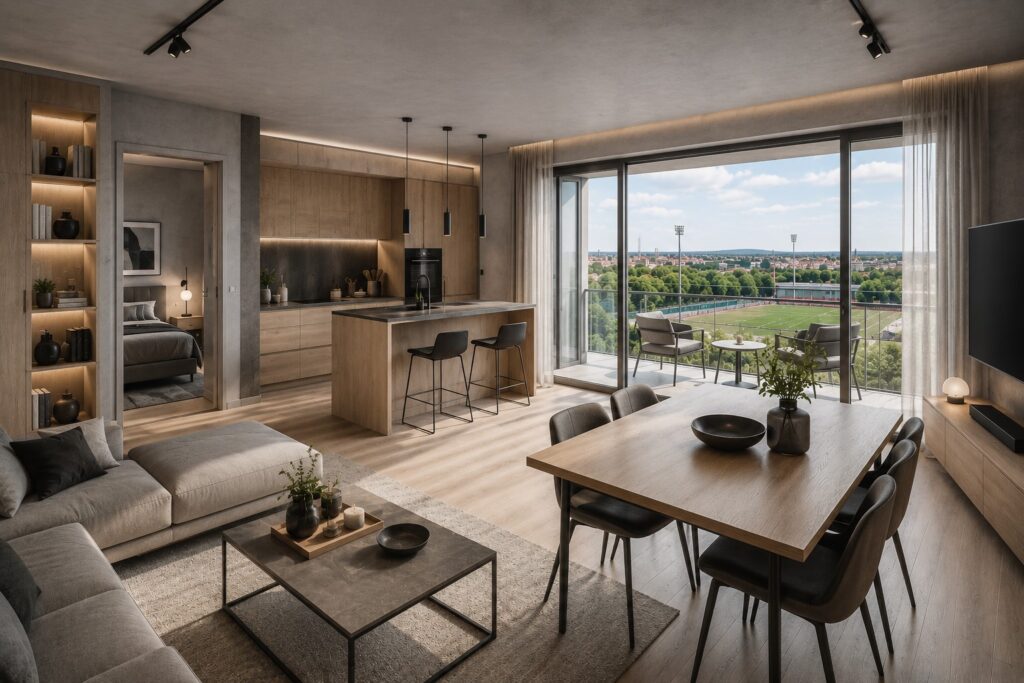
Hungary offers a wide range of real estate opportunities, from apartments in historic buildings to modern residential properties. With our local market knowledge and extensive network, HELPERS can assist you in identifying and purchasing at least two properties that fit the requirements of your investment and business plan.
Once your company is established and operating with steady income from its business activity, you become eligible for residency, subject to meeting the applicable requirements.
A solid business plan is required to demonstrate the viability of the company and supports the residency application. If you are already a resident, the relevant arrangements may also allow you to include your spouse and underage children (under 18).
Buying property alone does not automatically grant residency in Hungary. In this program, the company and its real estate rental activity form the basis of the residency route.
There are several residence permit options that may be relevant depending on your circumstances. Our immigration specialists can help you understand the applicable requirements and identify the appropriate solution for your situation.
EU and EEA citizens can generally purchase residential property in Hungary without restrictions. Non-EU nationals may need to obtain a purchase permit from the relevant authority before completing a property purchase.
At the same time, a Hungarian company can purchase Hungarian real estate without a purchase permit, even if the company is owned by a non-EU national.
In addition to the purchase price, buyers should also consider other costs associated with acquiring property and preparing it for being rented out, including:
HELPERS provides a transparent overview of the expected costs before you proceed with a purchase and supports you throughout the process.
The Hungarian real estate market has its own terminology and concepts that may be unfamiliar to international investors. If you are considering a real estate investment in Hungary, understanding these local terms can help you navigate property listings and the purchase process with greater confidence.
In Hungarian, area is always given in square meters (sqm, m2, or m2). The size of the floor space, the garden, or even the entire plot will most probably be indicated in square meters. 1 square meter is around 11 square feet. You can find a simple calculator here.
In Hungarian, the ground floor is called “földszint” (literally “ground floor”). The first floor is one floor up from that. The Hungarian word “emelet” means upper floor, so if an apartment building is “10 emeletes”, it will normally have 10 floors above the ground floor.
The ground floor can be a few steps above or below the level of the street, but the difference cannot be a full level. Sometimes the lowest floor of a building will be several steps above ground – typically if the street is on a slope. In that case, the ground floor may be called “magasföldszint”, which might be translated as high or raised ground floor.
“Félemelet” literally translates to “half floor”, although sometimes it is also called a mezzanine. You will typically find these in houses built before World War II. Originally, a half floor held rooms that belonged to stores that operated on the street level of a house, but later the designation was used to add extra levels to a house. For example, if someone got a permit to build a house with 3 upper floors, they could build a house of up to 6 floors above the ground floor by adding half floors between official floors.
Fun fact: In some old houses of Pest, you will get a ground floor, a raised ground floor, and a half floor; the “first” floor will come only above that.
“Szuterén” is basically an apartment in the basement, although it has still windows. Sometimes it is called a “félszuterén” (meaning “half subterranean”) to distinguish from levels fully below ground – although actual living spaces are rarely created there.
In the U.S., it is typical to indicate the number of bedrooms on a listing. In Hungary, you will see the number of total rooms, which will include e.g. the living room, the library, or the game room, but exclude wet rooms like the kitchen, the bathroom, or the laundry room.
A proper room in a modern building cannot be smaller than 8sqm (86sqft), but especially in old houses, you will see the designation “félszoba” (meaning “half a room”). This denotes rooms that are between 6-8sqm, but they still have heating and windows. A room under 8sqm without heating or windows is called an “alkóv” (alcove), and they are typically used as bedrooms.
In Hungary, the kitchen is traditionally a separate room, but over the last 30 years, open plan kitchens have become more widespread too. They are called “amerikai konyha”, since the design originates from the U.S.
In apartment buildings, many homes have balconies (“erkély”), the floor space of which is included in the listing. Sometimes you get a proper, open balcony which protrudes from the building, but sometimes the balcony is basically a recess in the façade (in which case it is also called a “loggia”). Both types may be covered (usually glassed over), in which case we talk about a “built-in balcony” (“beépített erkély”).
Sometimes an apartment only has a “French balcony” (“francia erkély”), which is nothing more than a narrow ledge with a barrier in front of a door.
Many Hungarian homes have “távfűtés” (central heating), meaning that they do not have a boiler of their own; water for the heaters and the wall taps are heated at a separate facility, and distributed to the entire neighborhood from there, which is considered more cost-effective and convenient.
If a home has its own boiler, it is often called a “cirkó”, short for the circulation system built just for the home. Boilers are typically powered by gas or electricity.
When you buy real estate in Hungary, it will not be typically furnished or equipped. However, “built in” furniture and equipment cannot be removed after the sale. While Hungary is not big on walk-in closets, many homes have built in wardrobes (“beépített szekrény”), which are part of the design. Air-conditioning, heaters, and water features (shower, bathtub, sinks, toilets) usually stay.
Things that were custom-made for the home are typically included, like kitchen cabinets or specific pieces of furniture. In houses with high ceilings, sometimes there is a loft (“galéria”) to allow a more efficient use of space – that will usually stay too.
If you are not sure what stays and what goes after a viewing, make sure to ask.
Budapest districts are traditionally numbered with Roman numerals, although the use of Arabic numerals is getting more and more widespread, especially in English.
Fun fact: For property listings, it is common to list only the ZIP code and not the full address because a ZIP code can already tell you the approximate location. Each Hungarian ZIP code has 4 digits. Budapest ZIP codes always start with a “1”, and the next two digits tell you the district. For example, the ZIP code 1117 tells you that the property is located in Budapest, in District 11.
There are various types of apartment complexes in Hungary, typically depending on when they were built. Typical types of apartment complexes are:
In the second half of the 19th century and the first half of the 20th century, many apartment building were built in Pest for the workers (“bérház”) and for the bourgeoisie (“bérpalota”). They are made of bricks, and typically have high ceilings (3-5m). Apartments can be reached through open corridors that run on the inner façade of the house (called a “gang” as a German loanword), above a paved inner courtyard. Since most of these buildings are in downtown Budapest, buying an old apartment and renovating it can be an excellent investment.
Between the 1960s and 1990s, many apartment complexes were built from prefabricated concrete blocks (called “panel” in Hungarian). In Budapest and other cities, there are entire panel neighborhoods, which are nevertheless walkable areas with all kinds of facilities (schools, shops, clinics, parks) thanks to conscious urban planning. When buying such an apartment, the experience of living there will depend a lot on the neighbors, because concrete walls conduct sound unfortunately well.
Apartment complexes are still being built, with modern technology, up to modern standards. New ones are typically in the outer districts of Budapest or just outside the city limits, although not necessarily: the Helpers Office is located in Budapart, which is a new housing development with various apartment complexes near the city center.
Different types of lands allow for different use, with different buildability (meaning that there will be a limit on how much of the land you can use for building on it) and various additional expectations.
Important: The type of land is always shown on the title deed and it is legally binding. This official classification should be checked before purchase to see if it matches current appearance and intended use.


Monday – Friday
9am – 5pm CET
Helpers Hungary Kft
Budapart Gate
Dombóvári út 27
Budapest 1117, Hungary
If you’re visiting us, please use entrance A and come to the 2nd floor.